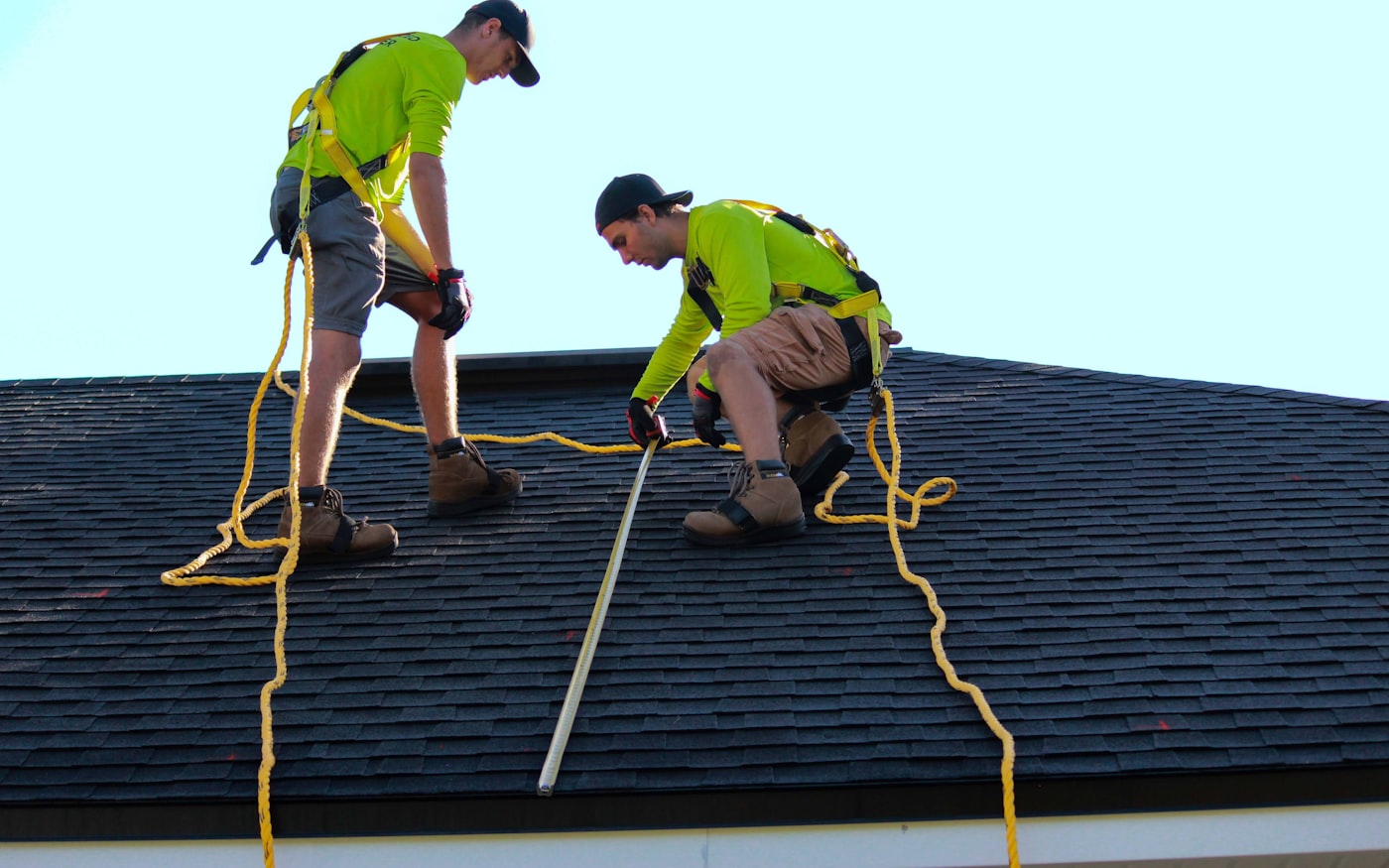
When a homeowner has a leak after a storm, they search "roofer near me", tap one of the top three map results, and call. If your roofing company isn't in that box, you never had a shot at the job. Here's why roofers struggle on Google Maps, why the setup is different from a normal local business, and the fixes that actually move you up.
The 3-pack is the whole game for roofers
Search "roofing company" plus your town and look at what Google shows first. Above the regular blue links there's a map with three businesses in a box. That's the local pack, or "3-pack", and it takes the large majority of clicks for local service searches. For high-urgency searches like "emergency roof repair" or "roof leak near me", it's even more lopsided, because nobody scrolls when water is coming through their ceiling.
So the real question isn't "how do I get on Google Maps". You're probably already on the map somewhere. The question is how to climb into those top three slots for the searches that bring paying jobs. That's a ranking problem, and roofing has a few quirks that make it different from, say, a dental practice trying to rank on Maps.
Quirk 1: Roofers are a service-area business, not a storefront
This is the single most common thing roofers get wrong, and it quietly caps your ranking. A dentist or a restaurant has a location customers come to, so they show a street address. You don't. Customers never visit your yard or office, you go to their homes. Google has a specific setting for this called a service-area business (SAB).
In your Google Business Profile, that means you clear the street address field and instead set service areas by city, county, or zip code. If you list a commercial address that you don't actually receive customers at, you're risking a suspension, and suspended profiles vanish from the map entirely. Roofers get suspended for this constantly because they copied the setup of a normal business.
- Set the business type to "I deliver goods and services to my customers" and hide the address.
- Add service areas that match where you genuinely work, not the entire state. Twenty zip codes you actually serve beats a 60-mile radius you're pretending to cover.
- Keep your name, phone, and hours identical everywhere they appear online. Inconsistent details are a ranking drag and a trust problem.
Distance still matters: Google favors businesses near the searcher. You can't move your shop, but accurate service areas tell Google exactly which searches you should appear for, and that alone fixes a lot of roofers who were ranking for the wrong neighborhoods.
Quirk 2: Categories built for roofing, not "contractor"
Most roofers set their primary category to "Roofing Contractor" and stop. The primary category is the heaviest single lever you control, so get it right, but then use the secondary slots too. Google lets you add multiple categories, and each one opens you up to a different set of searches.
Primary: "Roofing Contractor". Secondary, where they actually apply to your business: "Gutter Cleaning Service", "Siding Contractor", "Metal Roofing Service", "Roofing Supply Store", "Construction Company". Don't add categories for work you don't do, that backfires. But if you install gutters and do siding, claiming only "Roofing Contractor" leaves money on the table.
Quirk 3: Reviews are harder for roofers, so the system matters more
A roofer might do 8 to 20 jobs a month. A busy dentist sees that many patients before lunch. So roofers can't lean on sheer volume, which makes a consistent review process the difference between ranking and not. Recency counts as much as the total: a steady trickle of fresh reviews outranks a big pile that all arrived two years ago.
- Text every customer the day after the job is done, with a direct Google review link. The day-after window is when satisfaction is highest and the new roof is still the most exciting thing they bought all year.
- Ask in person too. The crew lead or owner saying "if you're happy, a quick Google review really helps us" at final walkthrough converts far better than a cold text alone.
- Reply to every review within a couple of days. For the rare bad one, stay calm and professional in public and take it offline. Future customers read your responses to the bad reviews more closely than the good ones.
- Never buy reviews or offer a discount for one. Google catches it and can suspend you. For more on this, see our guide to a Google reviews strategy.
Quirk 4: Photos of real jobs, posted often
Roofing is one of the few trades where photos sell on their own. Before-and-after shots of a tear-off and re-roof, drone footage of a finished job, the crew on a steep slope, storm damage you repaired. Google rewards profiles that look actively run, and a roofer who adds real job photos every week sends exactly that signal.
Use your own photos, never stock. Google can tell, and stock imagery hurts more than it helps. Post a short update once a week too: "Full tear-off and architectural shingle install in [town] this week" with a photo. Each post is indexed and reinforces what you do and where you do it.
Quirk 5: Your website has to back up the profile
Your Business Profile doesn't rank in a vacuum. Google cross-checks it against your website. If your profile says you do metal roofing and storm restoration but your site never mentions either, your map ranking for those services suffers. The two have to agree.
Practically, that means a real page on your site for each major service (asphalt shingles, metal, flat/commercial, storm and insurance work, gutters) and a page for each main town you serve, each with genuine content rather than a thin paragraph. Add your service-area pages, make the phone number tap-to-call on every page, and make sure the site loads fast on a phone, because most "roofer near me" searches happen on mobile. This is the same groundwork we cover in getting a small business on Google Maps and in our local SEO service.
One more website signal that's easy to miss: citations. Those are listings of your name, address, and phone on directories like Yelp, Angi, BBB, and trade sites. They have to match your profile exactly. We break down which ones matter in local SEO citations.
Storm season changes everything
Roofing demand is spiky in a way most local businesses never deal with. A single hailstorm can triple "roof repair" searches in your area overnight, and that's exactly when out-of-town storm chasers flood in. The roofers who win that surge aren't the ones who scramble after the storm, they're the ones who already had a strong, well-reviewed, established profile when the weather hit. Maps ranking is built over months, so the work you do in the quiet season is what pays off when the storm rolls through.
The realistic timeline
Fix the service-area setup and categories and you can see movement within weeks, because that's correcting an error rather than building authority. The review and content work compounds more slowly: most roofers who stay consistent climb into the 3-pack for their main town in 4 to 6 months, and dominate the surrounding areas by month 9 to 12. The failure mode is always the same, a burst of effort followed by months of silence. Thirty minutes a week, every week, beats a heroic weekend you never repeat.
If you'd rather have someone run this for you, that's literally the job. And if leads are the real goal, pair this with our take on getting roofing leads without paying Angi or HomeAdvisor. We run the same play for plumbers and electricians too.
Frequently asked questions
Why isn't my roofing company showing up on Google Maps?
Usually one of three reasons: your Google Business Profile is unverified or set up as a storefront instead of a service-area business, you have too few recent reviews compared to competitors, or your website doesn't back up the services your profile claims. Fix those three and most roofers move into the map results within a few months.
Should a roofer hide their address on Google Business Profile?
Yes, if you work at customers' homes rather than serving them at your location. Roofing is a service-area business, so you clear the address field and set service areas by city or zip instead. A visible commercial address you don't take customers at can get your profile suspended.
How many Google reviews does a roofing company need to rank?
There's no fixed number, it's relative to your competitors. In most markets, 50 to 100 reviews with a steady trickle of new ones each month is enough to compete. Recency matters as much as the total, so a slow, consistent stream beats a one-time push.
Want your roofing company in the 3-pack?
We set up and run Google Maps and local SEO for roofers and other service businesses. No long contracts, no jargon.
Get in touchAlso worth reading: getting roofing leads.